
By Derek Olson
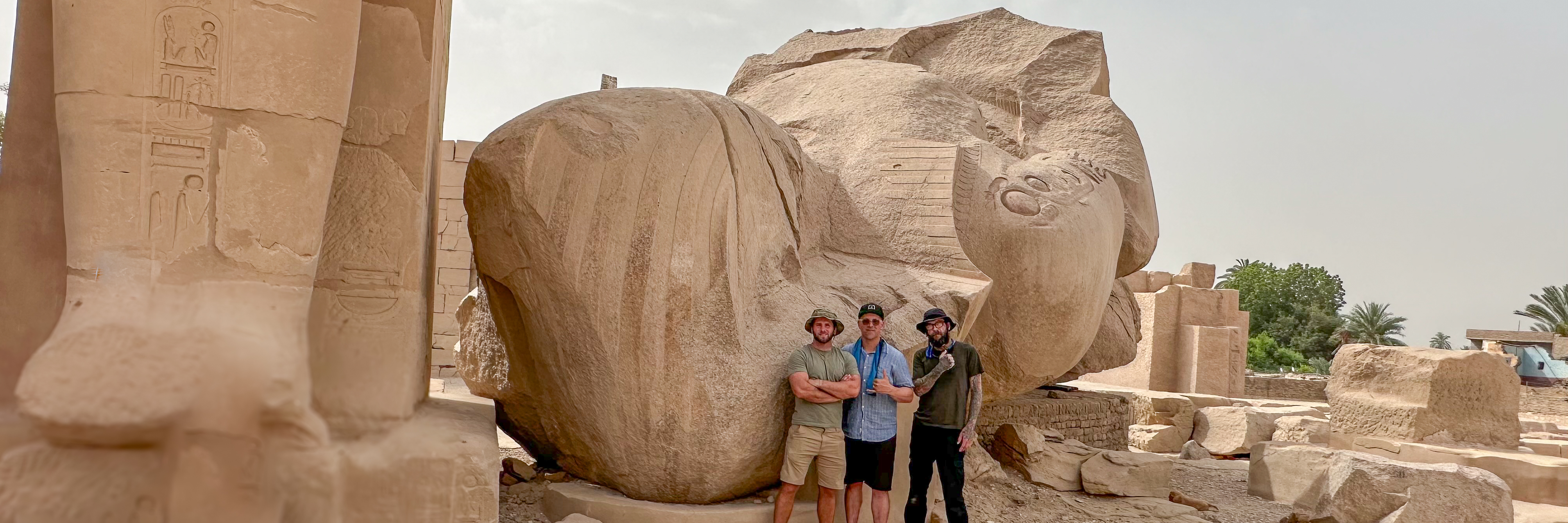
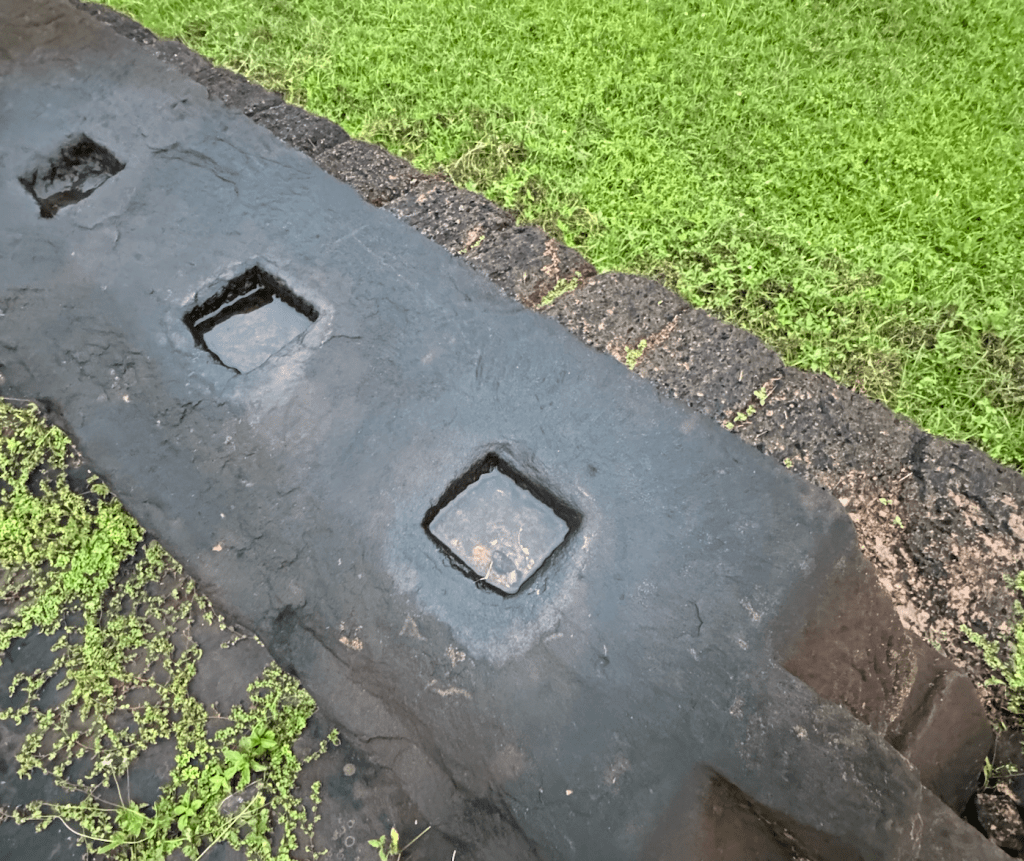
The mainstream archaeological narrative states that most of the temples you see in Cambodia’s Siem Reap area were made by the Khmer builders of circa 800-1400 A.D. using slave armies, ropes, wooden rollers, elephants and boats. Yet all over these sites you find anomalies and out of place artifacts like: metal clamp crevices, 3D ornate carvings, depictions of ice age mammals, massive motes (which are the largest cut barays on earth), giant precision lingams, precision spindles with lathe marks and huge megalithic blocks featuring 90 degree angles, interlocking nubs and what even looks like drill holes. The 2012 lidar scans of Angkor Watt revealed an incredible grid pattern of mounds inside the mote as well as massive grid patterns outside the mote that measures one mile long and appears as a digital circuit board from the air. Is there more going on here than we’ve been told?
One of my favorite sites from my recent trip to Cambodia was a structure that I had never even heard of before. Known as the “Baphuon” (BAH-poo-ahn), this temple is located in the Angkor Thom (Khmer meaning “Great City”) area, which was the capital city of the Khmer Empire from 802 to 1431. The Baphuon is also called the “Golden Mountain” in Sanskrit. Baphuon more or less means something like “the divine mountain of the three worlds” — a Khmer name that reflects its symbolic role as a temple-mountain. As you approach this amazing temple you realize that it is built on an artificial hill, and that it is a three-tiered pyramid or temple mountain. The temple is known for its grand entrance, its scale, and the impressive reliefs – especially those on the second enclosure of the top level.
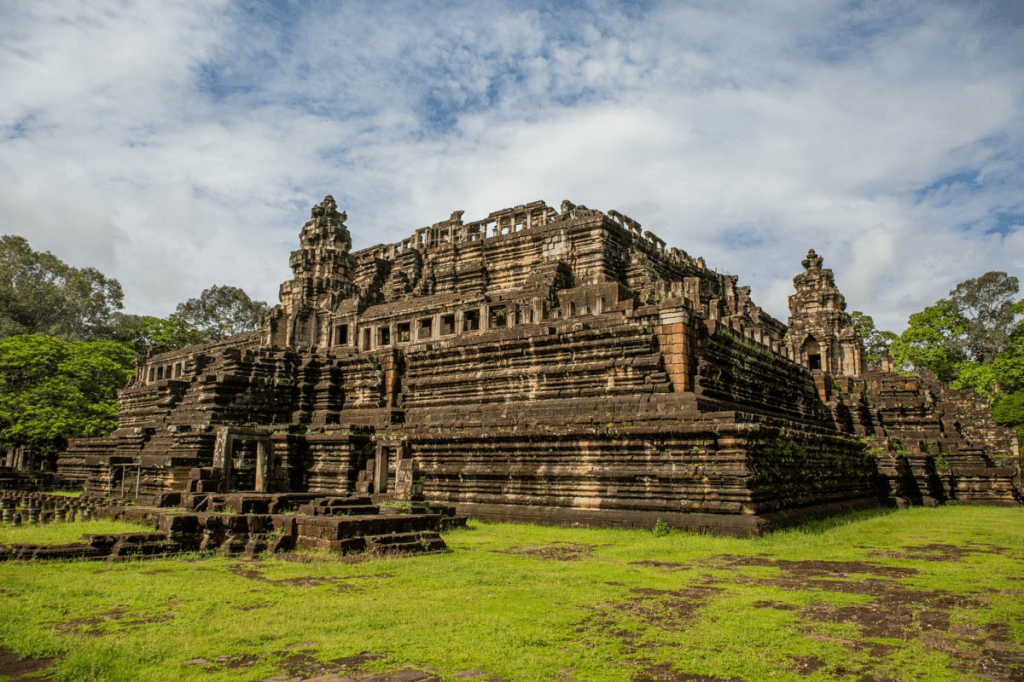
The temple orientates to the east beginning with a gopura whose northern end connects with the Terrace of the Elephants. A gopura is a monumental gateway tower that marks the entrance to a temple complex or the entrances between enclosures. This gopura retains some devata carvings on its western side. A devata is a female deity or divine figure carved in stone on temple walls. The temple was originally dedicated to Shiva but was later converted into a Buddhist temple. On the west side of the site is a huge 30 foot tall by 230 foot long statue of a reclining Buddha that was built into the second level. Archaeologists believe that large portions of the temple had probably already collapsed by the time the Buddha was added later.
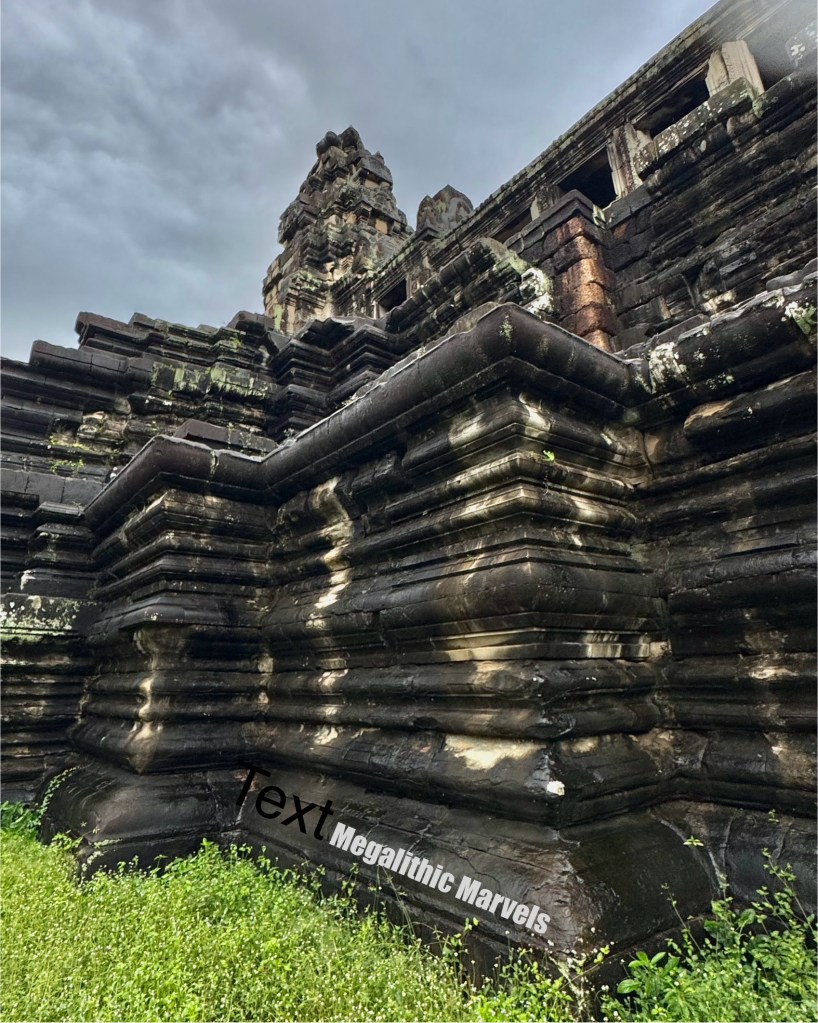
When you take a step back and gaze at this site from afar, you realize that the temple sits on a massive black 20 foot tall 9 tiered precision sandstone base that looks far different and far superior to much of the construction that was built on top of it. The base and lower areas feature this air-tight mortarless engineering, whereas the higher temple areas and reclining Buddha built above are of inferior construction. This is similar to what we see in Peru in places like Machu Picchu, where the Inca built on top of the older, larger and superior megalithic granite core.
Chinese envoy Zhou Daguan, who visited the Khmer kingdom in late 13th century, described Baphuon as a “an exquisite site with a bronze tower… a truly astonishing spectacle, with more than ten chambers at its base.”
In 2015, a French team, using the Carbon-14 dating method, revealed the construction was older than previously thought and can now be considered as the major temple associated with Suryavarman I (1010–1050 AD) instead of its conventional 16th century estimation. This confirms that the adding of the reclining Buddha was related to the Ayutthayan (ah-YOOT-thai-yahn) occupation of Angkor circa 1430-1440 AD, during a major period of political and religious instability.
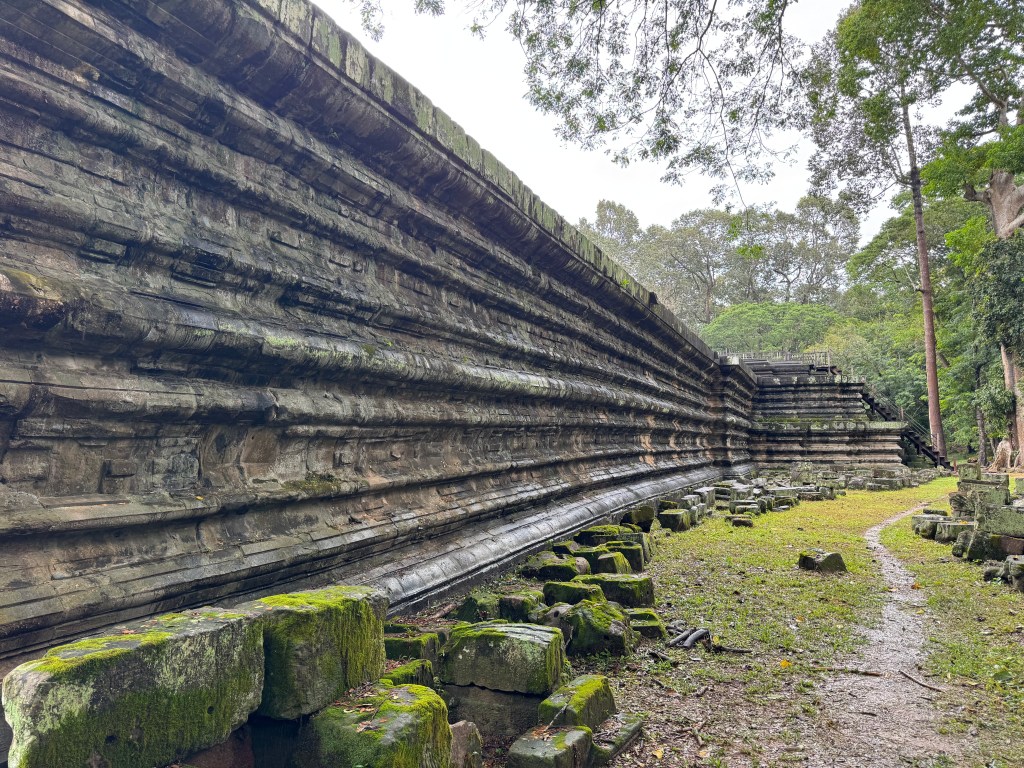
The site was first cleared by Jean Commaille in 1908 and appeared mostly in ruin. In 1960, B.P. Groslier began an ambitious restoration program of dismantling the ruins in order to resolve the structural issues inherent in its original plan and then reconstruct the site. He laids some 300,000 of its stone blocks in the grass and jungle around the site. Their plan was to then rebuild it, but then the communist Khmer Rouge swept to power in 1975 and restoration work stopped until a French-led team of archaeologists began to finally reassemble the temple in 1995 under the guidance of Pascal Royère. Without the benefit of Groslier’s original plans from 1960, Royare had to figure out how to reassemble the 300,000 stone blocks that were laid out on the ground from scratch – and it only took hi, 16 years to solve that massive puzzle! The site was reopened in 2011.
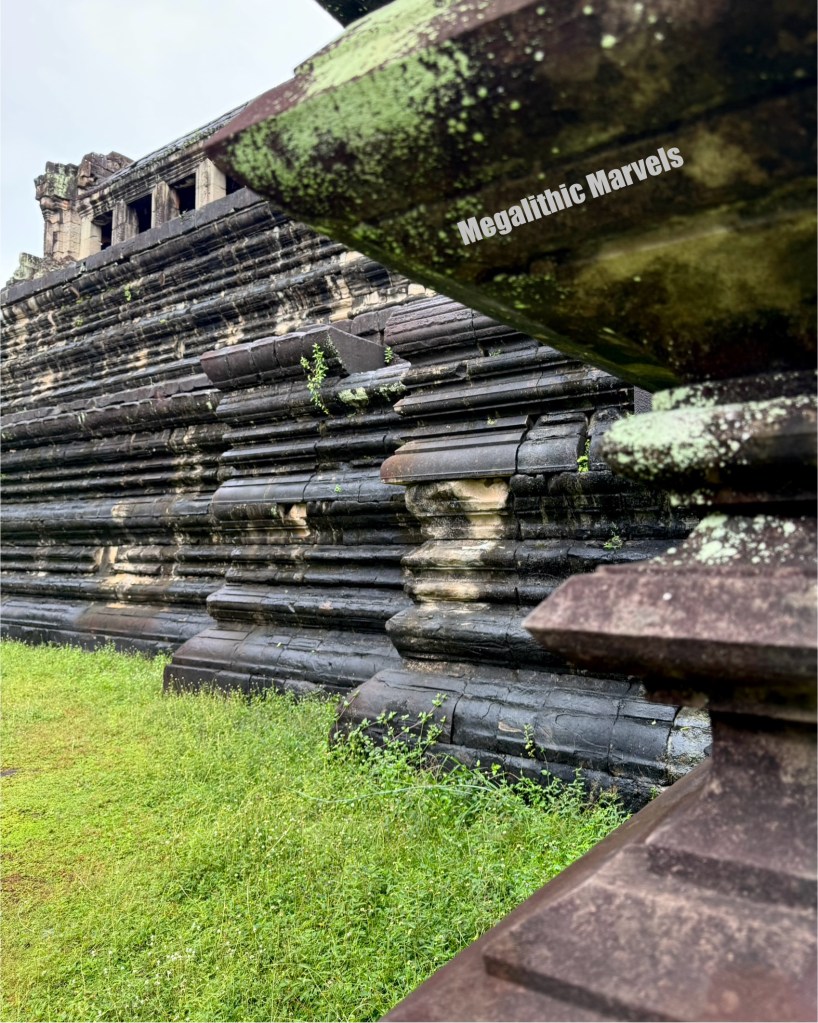
When Royere began work on the project in 1993, grass and jungle had grown over most of Baphuon’s blocks. He spent much of 1994 trying to figure out how to approach the complicated job. Royere stated “the archive of the numbering system (for scattered stones) was stolen and destroyed by the Khmer Rouge, so we had to face a kind of a jigsaw puzzle without the picture how to rebuild it. Reconstruction required measuring and weighing each block, as well as numerous drawings to figure out how each part fits. Each block has its own place. It can’t be replaced by another one because there’s no mortar between them and you will not find two blocks that have the same volume and the same dimensions.”
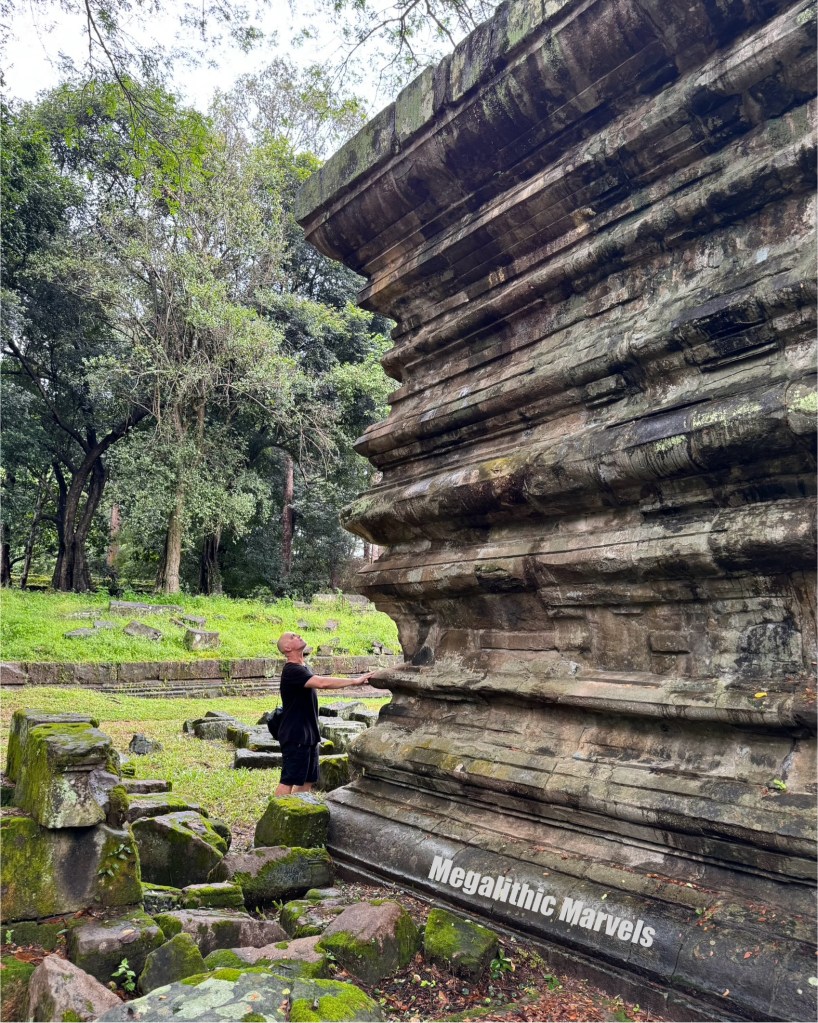
I found an old UNESCO article concerning Baphuon’s restoration and found this statement they made interesting. “The cause of its ruin was easy to understand; the Baphuon had manifestly been badly built. The high sandstone plinths enclosed the quantity of sand filling needed to build the three-story structure, but the proportion of the mix was not right and could not ensure long-term stability. The result was severe stress, which led to structural distortion, slanting walls and occasionally to the collapse of the structure at a very early stage.” – UNESCO
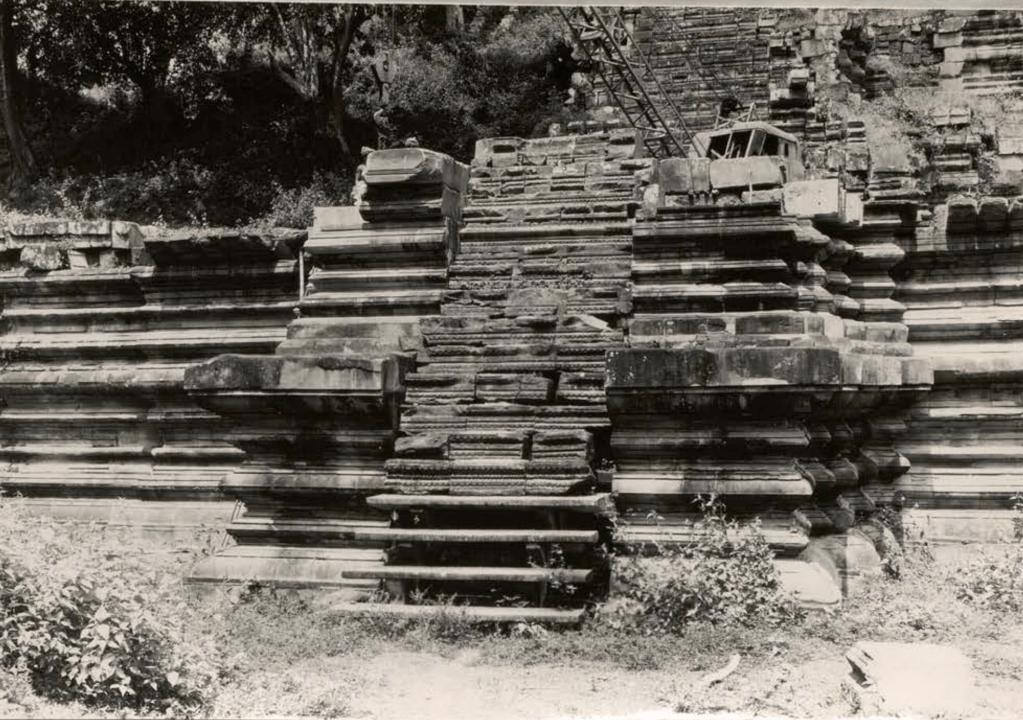
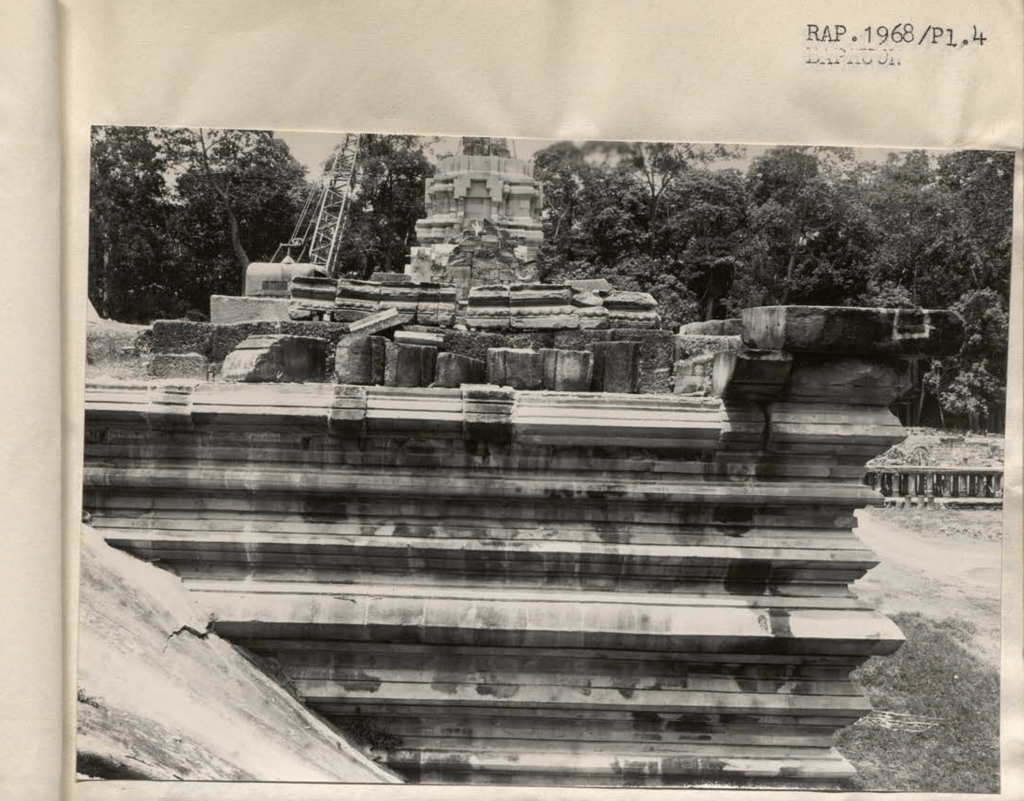
I find it interesting that they are saying that this incredible temple was “badly built.” Now after seeing this site in person, and also after scouring old photos I found from the 1960s restoration, I do not see a base that was badly built. I do see an upper temple that is clearly inferior to the base structure, and therefore I can imagine how the upper portions would have been falling apart. So from what I can tell by viewing these old photos, the restoration team did not take apart the base, but only what had been built on top of it. This then leads me to a final question: is the base of this site much older than the rest of the site that is built on top of it? Was the base engineered by an earlier lost civilization who possessed lost knowledge and ancient technology? Did the Khmer builders arrive circa 800-1400 AD, find this base and build there temple on top of it?
WATCH THE YOUTUBE VERSION BELOW


this says I’m leaving a comment for the ufo thing in 1953, not the new temple article.