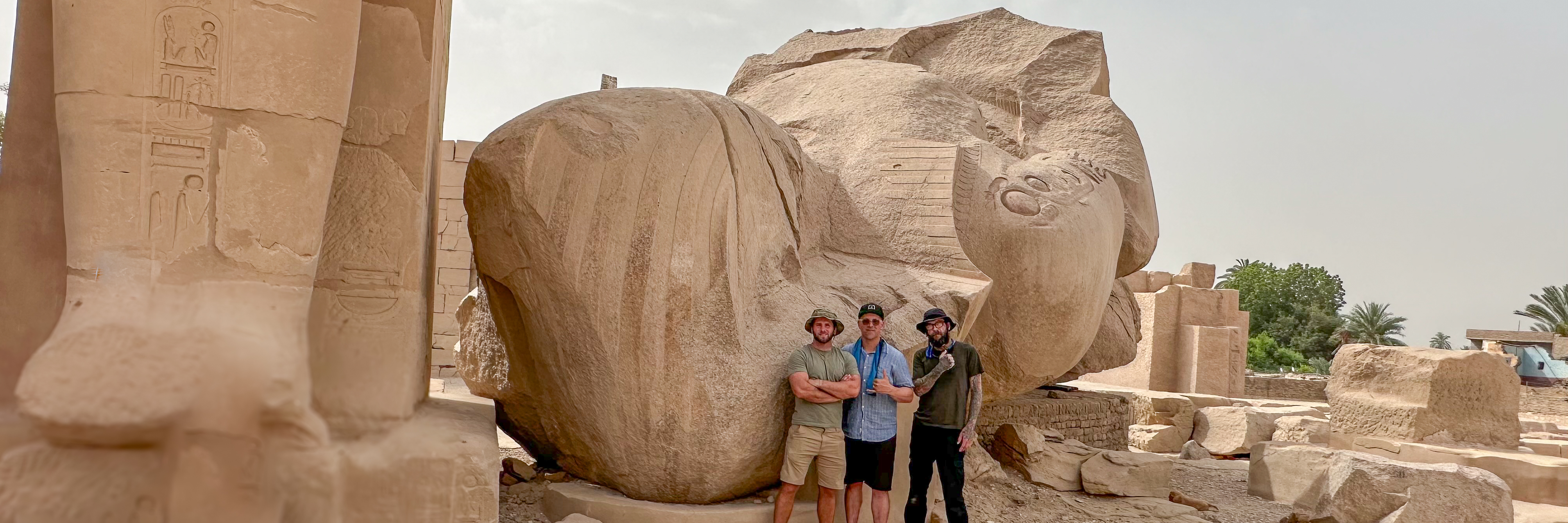


𝗧𝗵𝗲 𝗺𝘆𝘀𝘁𝗲𝗿𝘆 𝗼𝗳 𝗠𝗮𝘂𝗿𝘆𝗮𝗻 𝗣𝗼𝗹𝗶𝘀𝗵
Some of the oldest and most enigmatic stone monuments in ancient India are a set of perfectly polished sandstone columns traditionally referred to as “Ashoka’s Columns”, after the 3rd century BCE Buddhist king who inscribed many of them with his edicts. At least 40 of these columns are known to have existed in various parts of India and as far as Nepal, Pakistan and Afghanistan, although just about 20 survive today in a reasonable state of preservation.
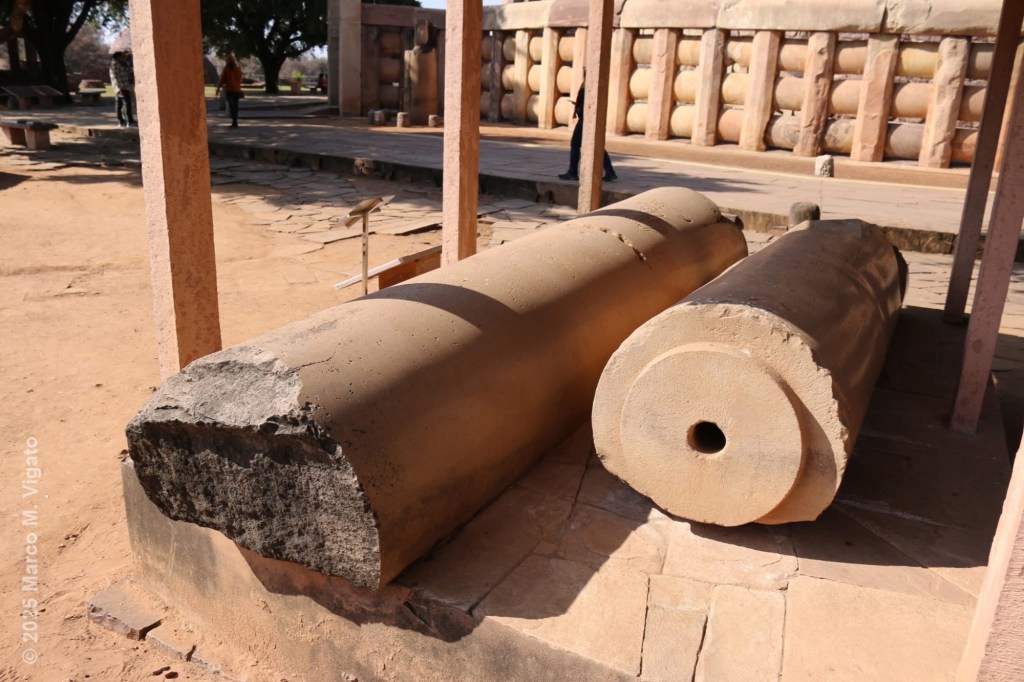
The columns are huge cylindrical and slightly tapering sandstone monoliths, measuring up to 40 feet (13 meters) high and weighing between 40 and 50 tons each. Incredibly, most of them appear to have been extracted from the same quarry in Junnar, near Varanasi, requiring the heavy monoliths to be transported for hundreds of miles to all corners of Ashoka’s empire. They originally possessed animal capitals depicting lions, elephants, or bulls. The Sarnath capital, discovered in 1905, is the finest and best preserved of them all. Chosen as the national symbol of India, it may be ranked among the greatest artistic masterpieces of all times.

The columns and capitals display an unexplained smooth and shiny surface which is known as “Mauryan polish”. It should be noted that sandstone and limestone cannot be polished to a mirror-like finish as displayed by the Ashoka Columns by any known abrasive method employed today (In fact, most polished sandstone used today for floors or kitchen counters is either vitrified or coated with a special sealer – This polished sandstone will deteriorate very quickly if exposed to the elements and lose its sheen).
So how did the Ashoka columns acquire their mirror-like finish, and how have they retained their sheen for over two thousand years?

Some research suggests that the columns were covered with a mineral coating containing hematite (a ferrous, magnetic mineral) inclusions. This coating appears to have been then glazed or vitrified at extremely high temperatures to make it weather and scratch resistant, by melting the quartz sand and hematite particles contained in the sandstone. Even so, the technology required to vitrify a 40-feet long monolith hardly exists today and would have been a closely guarded secret 2000 years ago, perhaps explaining why nearly all the columns came from the same quarry and none was manufactured locally.
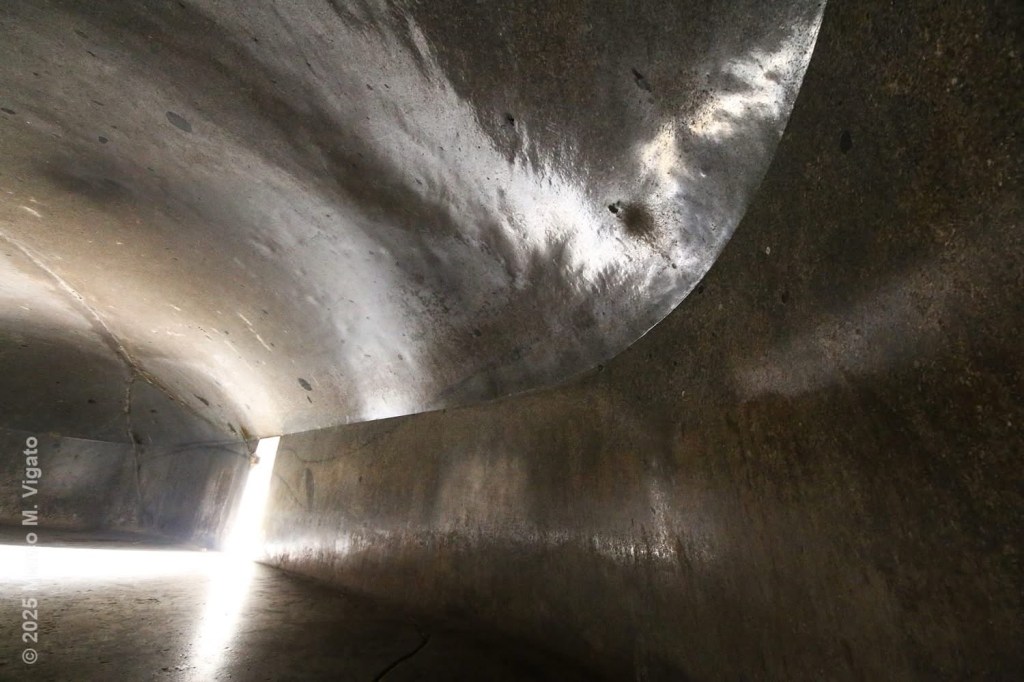
A similar technique may have been used to create the spectacular Barabar caves, a set of seven caves carved from solid granite in the northeastern Indian state of Bihar, which similarly display an exceptional level of polish and mirror-like reflecting walls and ceilings.


 megalithicmarvels.com
Boyd Bushman invented a ‘magnetic beam amplifier’, which should not be possible, according to any mainstream physics theory, since it creates something from nothing. Using mere magnets, you can amplify any RF signal. Now, Tesla found that if you take white noise either in RF or sound, apply that to an object or material, and listen for what bounces back, you discover it’s resonant frequency. So you then emit that frequency to that object with an additional wave that is 11x faster, and you destroy that object with utmost efficiency. Now, if you consider the fact that a continued fractal may be creating using RF charge, you can get right down to both sending and listening to atomic frequencies. Bushman remarked in the paper written about his amplifier, that such a thing is possible. This leads us to the hidden patent material on nuclear mining used to make d.u.m.b.s. This ‘nuclear’ mining technique literally breaks atoms apart like a hot knife through butter, leaving no waste behind, while some of the matter pushed directly into magnetic current will harden surrounding matter around the tunnel it makes as the matter there catches quarks to fill in gaps, and does this only by copying existing matter frequency patterns. So, all you really need is a powerful enough circuit to make such amplification possible. Without boring everyone with physics calculations they don’t understand, I’ll make it simple; you need to reach a superconductive state to radiate charge efficiently enough to the mining ‘cut’ area, and to do this without creating so much heat that your machine melts, zero point energy must be used unless you plan on going slow and using a nuclear battery power source (Strontium 90 based, invented by Paul Maurice Brown of Nucell Inc. Portland Or. The inventor died in a racing accident, but his powerplant technology is used in a few locations to this day.) Given the dangerous nature of storing strontium-90, I would lean toward the likelihood of such mining is not using it. Zero point energy is, after all, capable of more power output, and won’t contaminate the area should the mining machine fall into a chasm or set off an unpredictable magnesium and or methane explosion, which can be quite common down there. Tom Bearden’s paper on zero point energy described the true secret of this, which is not provided on Wikipedia- your deep state source for b.s. physics. He stated, quote “Pump z waves in sync yet out of phase imploding through nonlinear medium”. End quote. This came directly from Nikola Tesla’s hand before his. There are many people willing to read short articles about zero point energy, or watch Instagram or YouTube videos on this. I tried publishing a book on the subject in 2016 and had to publish an e-book, since I was unable to find a publisher I could afford. People are much more willing to dish out funding for steamy sex novels. This is unfortunately the reality. You will find that any set of 3 dynamos made to run one-another in parallel or in series with a carrier wave, is the most efficient method of creating a waveform that causes opposite sides of a spark gap to store and bounce charge back across if one side or the other can waste negative electrical energy. What is most interesting is how earth currently gives off a strong negative bias modulation of charge at 14.07hz, and it’s quite easy to use zpe to use that wave, as if it’s driving whatever transformer you put between it and a zpe device.