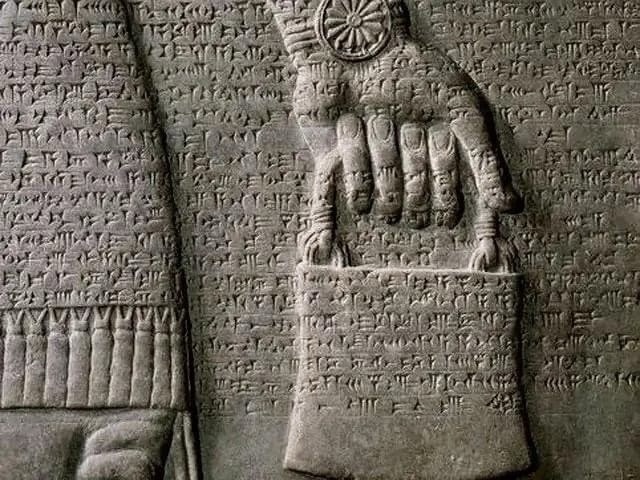

These mysterious symbols literally look like modern female handbags. They appear in the paintings of the Sumerians in Iraq, in the ruins of ancient temples in Anatolia, in the decorative arts of the Maori in New Zealand, in the crafts of the Olmecs in Central America… You can find this symbol of the handbag in various cultures around the world, regardless of era, and the first handbags discovered so far appeared at the end of the Ice Age.

Many of the ancient handbag depictions have a round, handle-like top and a rectangular bottom as the main body, with varying degrees of lines or patterns and other details on the top. Sometimes this handbag exists alone, sometimes it is carried by people or what appears to be gods.
So what is the meaning of the handbag?
One possible theory is that it simply and directly embodies the universe. The semicircular figure (the part that resembles the handle) symbolizes the vault shape of the sky, while the square underneath it represents the earth. In ancient civilizations round images are a conceptual connection, related to the spiritual realm or the non-material realm; square images are related to the earth or the material world. Therefore, the image of this handbag may symbolize the unified image of earth and sky, and also represent the fusion of material and immaterial elements.

In other regions, there are two places where the stone reliefs are surprisingly similar: one was created by the ancient Assyrians in Iraq, and the time was about 880-859 BC, and the other belonged to the Olmec civilization in America, the time is about 1200-400 BC. In the two embossments, there is a human-shaped pattern holding the handbag in the hand, like a basket or leather bag. When it was presented in the artistic creation of Assyrian culture, it was said that the handbag contained magic powder; and in the context of Olmec civilization, some people assumed that there was a certain kind of herb in it, which could give people the psychedelic excitement.

In a Maori myth a hero soared to the homeland where the gods lived, and when he returned to the world he brought back with him three baskets filled with divine wisdom. The handbags of the Maori people symbolize the worship and gratitude for the knowledge of the apocalypse.
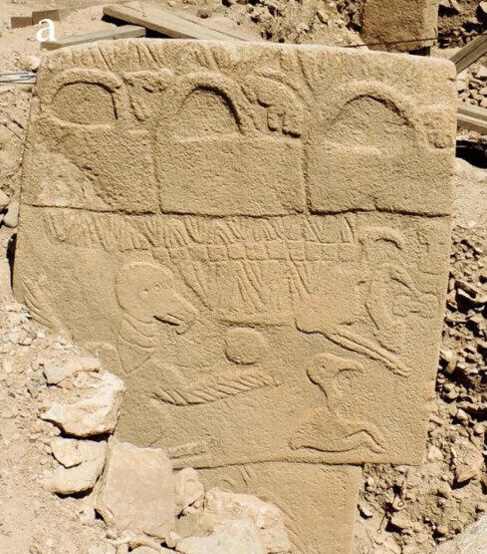
One of the earliest instances of the handbag motif can be seen in the ruins of Göbekli Tepe in southeastern Türkiye. Dating back to approximately 11,000 BC there are 3 handbags carved on one of the stone pillars.
In the Sumerian case, they’ may not be bags at all. Some theorize that they were actually buckets used to water sacred trees. What’s more? According to some translated Sumerian texts, the handbags seem to be identified as buckets, and there are even surviving examples of such buckets that look exactly like the ones in the depictions.
In Australia they are connected with Creation Mother, or Yinganna, considered by the Aboriginal people of Arnhem Land to be an incarnation of the earth mother energy and an aspect, or immediate relative of, the Rainbow Serpent. In the story of Yinganna she came from the East after emerging from the sea. With her, she carried many bags, each one carried the seeds of creation for a specific people, also their language and cultural identity. As Yinganna roamed she created the first people and gave to them language, agriculture (farming of yams is often singled out) and other key knowledge. Each people, or cultural group, had their own bag. Yinganna is represented as neither human or animal, and sometimes even incorporates lotus flowers and yams into her form, whether she be primarily in her snake form or human shape.


 megalithicmarvels.com