

By Derek Olson
Located north of Guam in the remote vastness of the Philippine sea, stretches the Northern Mariana archipelago chain, where two tiny islands are at the center a giant-megalithic-mystery.

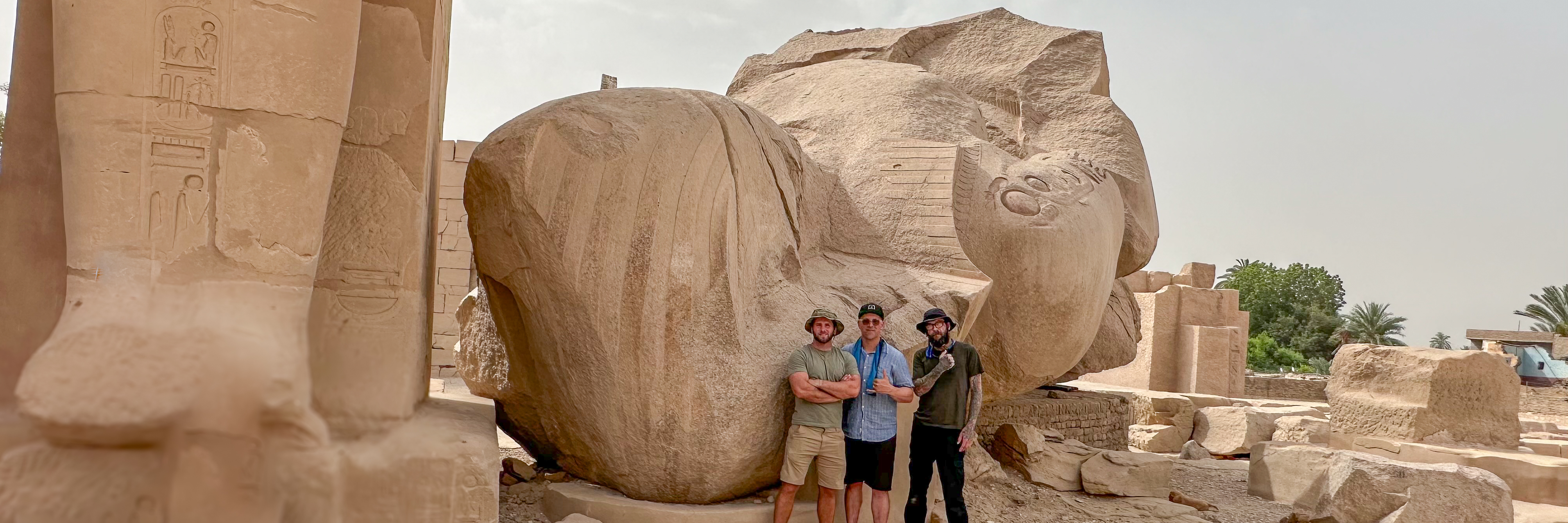
Located on the island of Rota is what is known as the “As Nieves Quarry,” or the “Rota Latte Stone Quarry” where several massive coral-limestone megaliths lie in an unfinished state, as if something unexpected suddenly took place here. Some of these blocks weigh upwards of thirty tons each and feature various shapes.

A latte stone, also called a “Taga” stone is a two-piece structure consisting of a base and a hemispherical cap, with the flat side turned upwards. Nine bases and seven caps have been found in this quarry. Some of these abandoned megaliths once stood approximately twenty-five feet tall.

The indigenous population known as the Chamorro, have existed on these islands from approximately 3,000 B.C. Did the Chamorro find these megaliths and later re-purpose the stone pillars by using them as foundations to construct their homes on top of two parallel rows of the pillars?
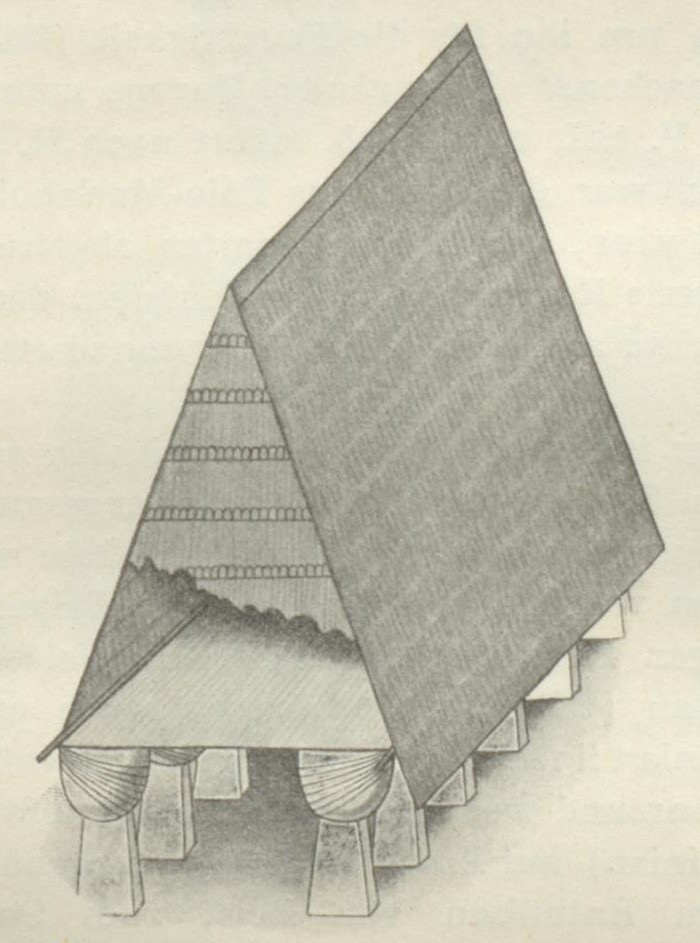
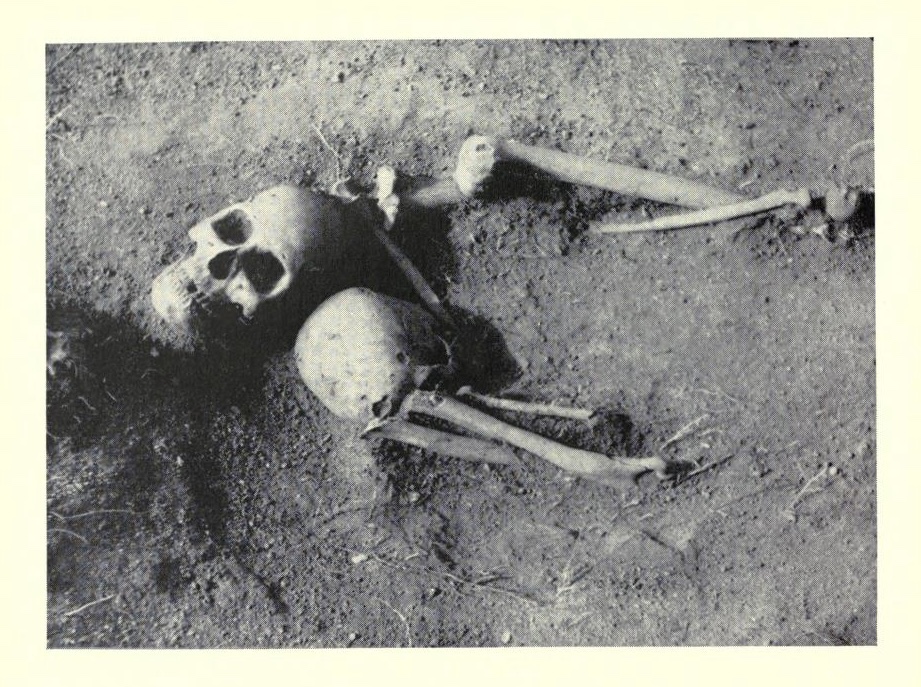
Excavations have revealed that the Chamorro buried their dead between these rows.
What is very interesting to me are the ancient island oral traditions that credit the creation of this quarry to a ten foot tall chief from Guam named Taga who is said to have possessed incredible strength.

According to the legends, as a child on Guam, Taga began demonstrating such super-human strength that his own father was jealous and tried to kill him. Therefore, Taga escaped to Rota which is about 50 miles away. He eventually fought and defeated the chief of Rota, thus becoming the chief of Rota himself.

Taga then married a woman and began to quarry the large stones himself in order to build a house. But for some unforeseen reason, he abandoned the site and moved his family to the neighboring island of Tinian. Why did he suddenly leave Rota island?
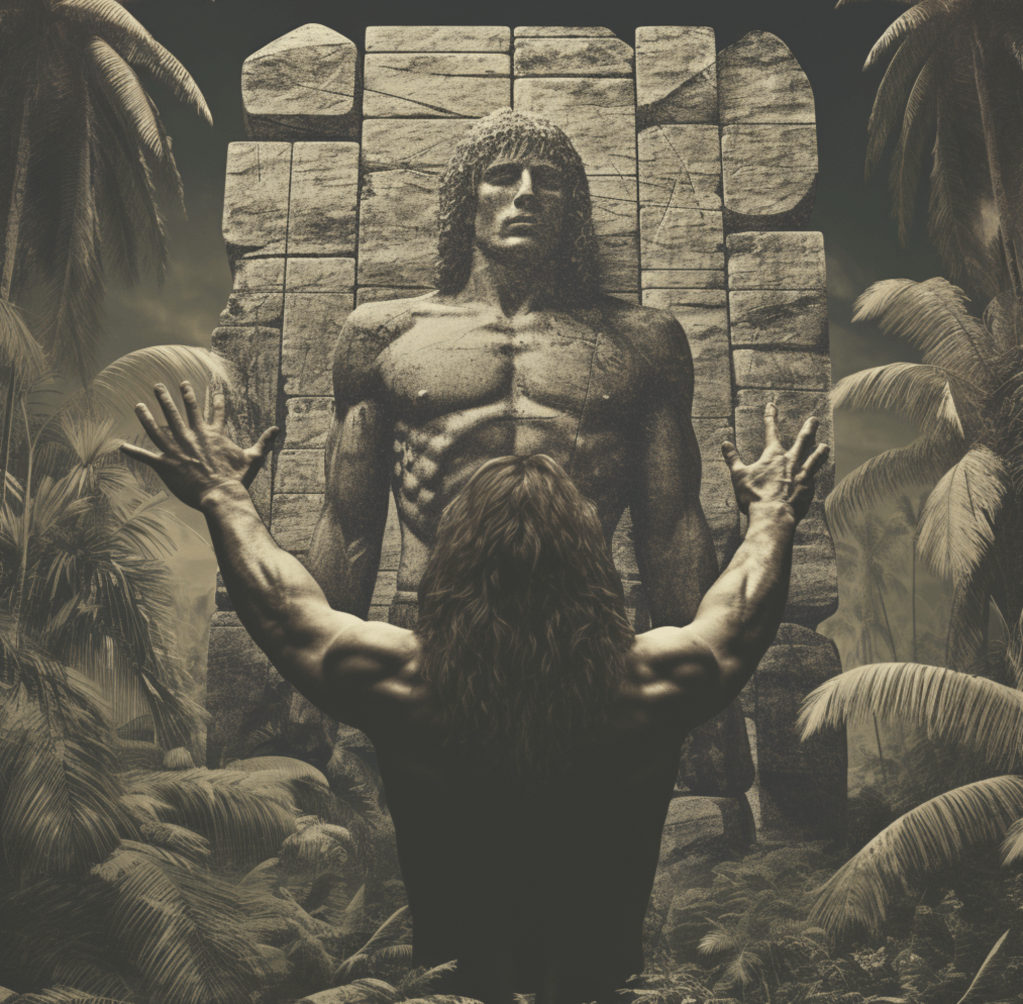
His reputation preceded him, and the chief of Tinian presented several challenges to test Taga’s strength. One account states that Taga was so strong that he could crush open a coconut with his bare hands, squeezing out the cream. After defeating the Tinian chief at three different challenges, Taga became chief of Tinian where he single-handedly carved and transported the multi-ton pillars himself in order to construct his house and a village for his people.


What’s more? The largest archeological site on the Northern Mariana Islands is located on Tinian and is still known to this day as the “House of Taga,” where the coral-limestone foundations of a massive structure once stood.

Of the twelve upright stones sketched by British explorer George Anson during his 1742 visit to Tinian, only one remains standing.

In his 1957 published work Marianas Prehistory: Survey and Excavations on Saipin, Tinian and Rota, anthropologist Alexander Spoehr noted that the House of Taga had most likely been the central latte structure among eighteen such structures on Tinian.

As I dug further into the details of the oral traditions concerning the giant Taga, I learned that the legends took a darker turn. Taga and his wife eventually produced twelve children. However, when Taga realized that his youngest son had greater strength than he, Taga flew into a jealous rage and murdered him. Grief-stricken, Taga’s wife died soon after of sorrow.

Full of rage and resentment over the murder of her brother, Taga’s youngest daughter surprise-attacked him spearing him to death. After losing her brother, mother, and now her father, the daughter died of a broken heart. The legend states that as time passed and each Taga’s remaining children died, that their spirits would inhabit the latte stones of their father’s house.
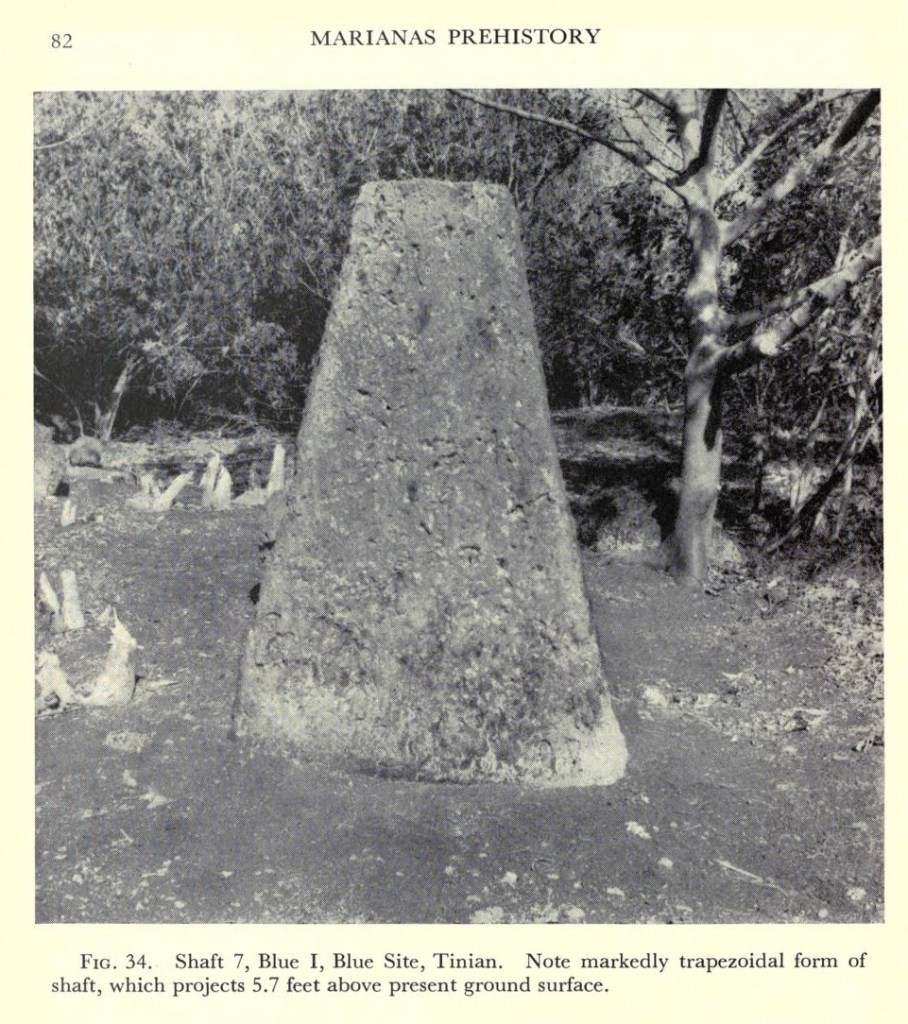
Over time, as each individual latte stone would fall to the ground, each spirit was released. The lone standing megalith today is said to imprison the spirit of the daughter who murdered Taga.

Sources:
Cover photo via “Ancient Buildings & Megalithic Structures” Facebook Page
https://archive.org/details/marianasprehisto48spoe
https://en.m.wikipedia.org/wiki/Rota_Latte_Stone_Quarry
https://en.m.wikipedia.org/wiki/House_of_Taga

 megalithicmarvels.com
Amazing